


Time on page might sound like a boring metric, but it’s actually one of the clearest signals of how well your website content is doing its job. If you own or run a moving company and you’re investing in your online presence, understanding this metric can tell you a lot about how people engage with your business before they ever pick up the phone.
Let’s break down what it is, why it matters, and what you can do with it.
What Is Time on Page?
In simple terms, Time on Page measures how long a visitor stays on a specific page of your website before clicking to another page or leaving altogether. It’s calculated by taking the difference between the time someone lands on a page and the time they go to the next one.
If someone lands on your blog post about “10 Packing Tips for a Stress-Free Move” and sticks around for 3 minutes, that means the content probably held their attention. If they bounce after 10 seconds, you might have some work to do.
Keep in mind: If the visitor leaves without visiting another page (a bounce), most analytics platforms won’t be able to calculate their time on page accurately. It gets marked as zero—even if they were there for five whole minutes.
Why Time on Page Matters for Moving Companies
Time on page gives you a behind-the-scenes look at how engaging and useful your content is. If someone is actively reading your blog post, watching your embedded videos, or checking out your service pages, they’re more likely to remember your brand—and eventually reach out.
Here’s why it matters:
- Content Effectiveness: Are your blog posts actually helpful, or are people skimming and bouncing?
- User Experience: Is your site easy to read, navigate, and use on mobile devices?
- Lead Nurturing: The longer someone spends on your site, the more chances you have to convert them into a lead.
How to Improve Time on Page
Improving this metric doesn’t mean you need to trick people into staying longer. It means making your content more engaging, helpful, and enjoyable.
Here are a few ways to do that:
- Start with strong intros. Hook readers right away with something they care about.
- Use formatting to your advantage. Break up text with headers, bullet points, and images.
- Embed videos. A short explainer or crew spotlight video can keep people watching.
- Link to related content. Got another post on moving tips? Invite them to check it out.
- Write for humans, not robots. Keep it friendly, helpful, and conversational.
What’s a Good Time on Page?
There’s no perfect number across the board—it depends on the type of content. For most service-based businesses like moving companies:
- Blog posts: 1–3 minutes is solid
- Service pages: 45 seconds to 2 minutes is common
- Landing pages: Depends on the goal, but anything over 1 minute is often a good sign
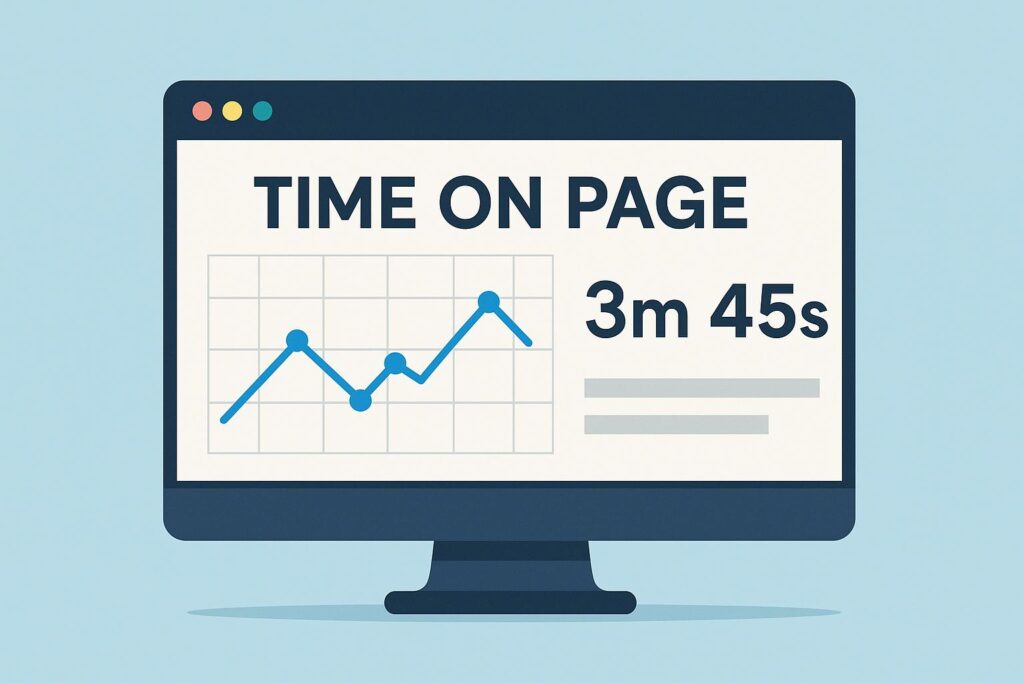
If you notice certain pages have a very low time on page, it could be a sign that:
- The content isn’t matching what users expected
- The page is hard to read or navigate
- It loads too slowly (check your page speed!)
Where to Find This Metric
If you’re using Google Analytics, Time on Page is easy to find under Behavior > Site Content > All Pages. You’ll see how long people are sticking around—and which pages are doing the best job.
This is great info to have if you’re running SEO campaigns, writing new blog posts, or testing out landing pages.
Final Thoughts
Time on Page isn’t just another number in your Google Analytics dashboard—it’s a window into how well your website is doing its job. The more helpful and engaging your content is, the longer people stick around—and the better your chances are of turning that visitor into a booked move.
So the next time you look at your website stats, take a look at Time on Page. It could be telling you a whole lot more than you think.
Want help improving your website content or analyzing your analytics? That’s exactly what we do—reach out anytime.
Leave a Reply