


Let’s say someone visits your moving company’s website. They’re not ready to book yet, but they’re curious. A few days later, they see one of your ads. Then they read a blog post or two, maybe open a couple of your emails, and finally—boom—they request a quote.
That journey from “just browsing” to “booked customer” is what a marketing funnel is all about.
In this post, we’ll break down what a marketing funnel is, how it works, and why it’s such a powerful tool for moving companies looking to grow their leads and sales.
So, What Is a Marketing Funnel?
A marketing funnel is a model that represents the stages someone goes through before they become a customer. The idea is simple: not everyone who discovers your business is ready to book a move right away. Some need more information. Others need time. The funnel helps you guide those people along the way.
Most funnels break down into three key stages:
- Top of Funnel (Awareness) – They just found out about you.
- Middle of Funnel (Consideration) – They’re thinking about using your service.
- Bottom of Funnel (Decision) – They’re ready to book.
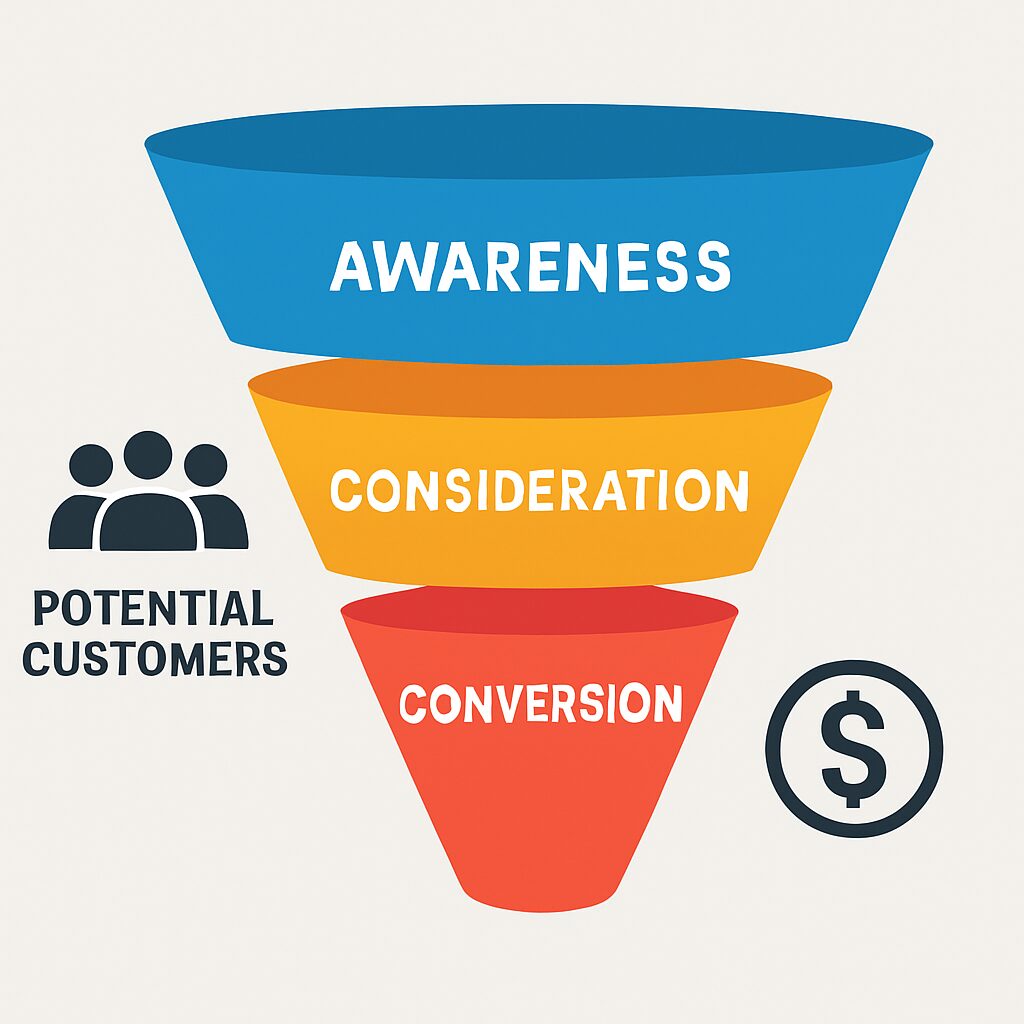
Your job? Create content and touchpoints that help people move through those stages naturally.
Top of Funnel: Get on Their Radar
At the top of the funnel, people might not even know they need a moving company yet. They could be researching how to sell their home, looking for packing tips, or browsing neighborhoods. Your goal here is to introduce your brand and start building trust.
Good top-of-funnel content might include:
- Blog posts like “10 Things to Do Before You Move”
- Social media posts with helpful tips or funny moving moments
- YouTube videos showing how to pack like a pro
- SEO content that answers common moving questions
You’re not selling just yet—you’re being helpful. (This is content marketing at work)
Middle of Funnel: Stay in the Picture
Now they’re considering their options. Maybe they’ve read your blog, followed you on social, or visited your quote page. This is your chance to prove you’re the right company for the job.
Here, your content shifts to focus more on your value and trustworthiness:
- Customer testimonials and case studies
- About Us videos or crew introductions
- Pricing guides or service comparisons
- Email newsletters with moving checklists
Retargeting ads and email sequences are super effective at this stage. They remind people you exist and nudge them toward booking.
Bottom of Funnel: Seal the Deal
At the bottom of the funnel, they’re almost ready to book. Now it’s about making it easy and irresistible to say yes.
This is where clear calls-to-action, trust badges, online reviews, and limited-time offers shine:
- “Get Your Free Quote” buttons
- Simple contact or booking forms
- Verified reviews from happy customers
- A small discount or bonus (like free boxes)
Your landing pages matter most here. They should be clear, focused, and persuasive—check out our post on landing pages that convert for more.
The Funnel Isn’t Always Linear
People don’t always move through the funnel in a straight line. Someone might visit your site, leave, click on an ad a week later, read a blog post, and THEN decide to get a quote. That’s okay—the funnel is flexible. What matters is that you’re showing up with the right content at the right time.
Why Funnels Matter for Moving Companies
You’re not just running ads or posting on Instagram for fun—you’re building a path. A funnel helps you:
- Get more value from your website traffic
- Understand where people drop off
- Improve your messaging and offers
- Grow your leads and bookings over time
If you’re investing in SEO, email marketing, or PPC ads, a funnel ties all those pieces together. It’s the strategy behind the tools.
How to Start Building Your Funnel
Don’t overcomplicate it. Start with what you’ve already got:
- Your homepage = top of funnel
- Your quote form = bottom of funnel
- Add a blog post or two for the middle
Then build from there. Add a retargeting ad. Send a follow-up email. Create a video testimonial. Bit by bit, you’ll build a system that works for you around the clock.
Wrapping It Up
A marketing funnel is just a fancy way of saying: guide people, don’t rush them. Meet them where they are. Offer value. Stay in touch. And when they’re ready to move, they’ll think of you first.
For moving companies trying to stand out in a crowded market, having a funnel isn’t just helpful—it’s essential.
Want help mapping out your funnel or writing content for each stage? Let’s talk. That’s what we do.
Leave a Reply